

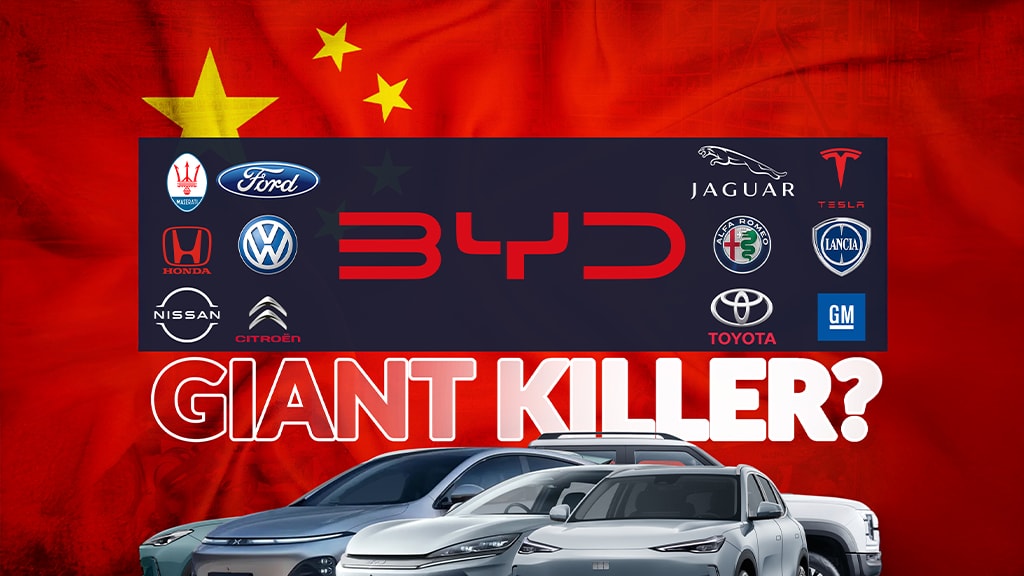

In recent years, the traditional car industry has been hit by not one but two meteorites: Chinese automakers and electrification. And just like those earlier meteorites wiped out the dinosaurs, will these make today’s car giants extinct?
This article will demonstrate why the four main challenges facing both manufacturing and service industries (that management accountants are well aware of): i.e. Quality, Cost, Time and Innovation, need to be at the forefront of strategic decision making if established car brands, predominantly from Europe, Japan, and the United States, have any hope of overcoming the multiple challenges brought about by Chinese EV manufacturers.
The Rise of Chinese Automakers
China’s rapid industrialisation over the past few decades has positioned it as a global manufacturing powerhouse. In the automotive sector, this growth trajectory has been particularly pronounced. Established car brands, long accustomed to dominating global markets, are now facing a formidable challenge from ‘Made in China’ vehicles.
As the world’s largest market for EVs, China has nurtured a domestic industry that is now capable of competing with established brands. Chinese manufacturers have leveraged cutting-edge technology and competitive pricing to capture market share, both domestically and internationally. Chinese automakers, including BYD, NIO, and Geely, have gained significant momentum, not just within China, but globally. These companies have benefitted from substantial government support, including subsidies, research and development incentives, and a favourable regulatory environment that has accelerated their growth.
In a repetition of how China upended the solar panel industry, it has built a staggering amount of auto manufacturing capacity, enough to make more than 50 million passenger vehicles of all types a year. That is roughly double domestic demand and enough to satisfy more than half of the global market.
Relatedly, China has made itself the EV heartland, accounting for two-thirds of worldwide sales last year and more than 90% of the growth. Despite this, the domestic sales of 11.2 million EVs barely cover half of the production capacity in China. China also dominates the underlying supply chain.
The New Battlefront: Europe
China’s trade surplus with the rest of the world has surpassed US$1 trillion ($1.5 trillion) for the first time – and that is only in the 11 months of 2025. That is a problem for both China and the rest of the world (Cash, 2025).
China’s exports grew 5.9 per cent in November 2025 and were up 5.4 per cent to US$3.4 trillion for the year to date. Imports, however, grew only 1.9 per cent in November and have actually fallen 0.6 per cent to $US2.3 trillion in the 11 months to the end of November, compared with the same period last year.
Therein lies the problem. The gulf between exports of US$3.4 trillion and imports of US$2.3 trillion – the US$1.08 trillion trade surplus China has produced so far this year – is generating increasing pushback from the rest of the world as other countries see their economies threatened by a Chinese-induced deindustrialisation (Bartholomeusz, 2025).
This is particularly affecting Europe.
In a state visit to China in early December 2025, French President Emmanuel Macron threatened China with European Union tariffs if no effort was made to reduce an expanding trade surplus with the EU. China’s exports to the EU have grown by more than 8 per cent this year (Xu, 2025).
“I tried to explain to the Chinese that their trade surplus is unsustainable because they are killing their own customers, particularly by no longer importing much from us,” President Macron said in an interview whilst in China (Bartholomeusz, 2025).
Particularly affected is the automotive sector in Europe, crucial for its economy — accounting for over 7% of GDP and employing more than 13 million people. The sector faces a tough balancing act to remain competitive while transitioning to cleaner mobility solutions. Recent data highlights that Europe’s carmakers are under significant pressure due to tariffs, intense competition from Chinese manufacturers, and the high costs associated with the shift to electric vehicles (EVs). The crisis is so serious that the European Commission President Ursula von der Leyen met with industry leaders in September 2025 to discuss these challenges (Samar, 2025).
New figures from the European Automobile Manufacturers’ Association (ACEA) reveal a 0.7% drop in EU new car registrations in the first seven months of 2025 compared to the previous year. Although Volkswagen and Renault showed gains, Stellantis NV experienced a decline in many of its brands. Tesla’s sales in Europe dropped by 40.2%, reducing its market share, as China’s BYD gained ground, surpassing Tesla with a 1.2% market share (ACEA, 2025).
Stellantis NV, formed from the merger of Fiat Chrysler Automobiles (FCA) and Groupe PSA, owns 14 major automotive brands spread across international markets exposed to Chinese competitors and a US market where it badly misjudged inventory. While its brands like Jeep and RAM look fine, its Alfa Romeo, Maserati, DS Automobiles, and Lancia brands are now considered by many analysts to be in a very vulnerable position within the larger Stellantis NV group, facing pressure to improve profitability. The company looks ripe for restructuring. and brands like Maserati and Lancia—often cited as most at risk due to tiny market shares—being more valuable as trophies for an international, probably Chinese, buyer.
Another sad story is that of Jaguar, a storied but struggling British brand owned by India’s Tata Motors Ltd. It appears to have committed what one can only describe as industrial suicide. In 2024/2025, it ended production of all existing models and removed inventory, leaving dealers with nothing to sell. It shred its existing traditions in a 30-second “copy nothing” brand ‘Reimagine’ video that was long on po-faced models but with no sign of an actual car. It heralded a new direction—high-end electric vehicles—with a concept, the Type 00, revealed in Miami shortly afterwards with a promise to deliver by 2026. If the idea was to draw attention, albeit often apoplectic, it worked.
The result? The brand had been in decline for years, but this move alienated customers completely. Its sales plummeted dramatically, with a near-total collapse in Europe (down almost 97% in April 2025) as the brand transitions to an all-electric future (Valinsky, 2025).
Fortress Japan: Not Immune
While Europe is reeling, Japanese and U.S. companies are also feeling the heat.
Japan’s carmakers, once a disruptive force in global markets, have been wrong-footed in the race to tap growing global demand for electric vehicles.
Even Toyota, Japan’s largest automaker, has not been immune. With take-up for alternatives to the internal combustion engine slowing in its domestic market, Toyota’s early bet on hybrid technology, while profitable, has left it trailing in pure EV development (Sier, 2024).
In November 2025, Honda, Japan’s second-largest automaker, downgraded its full-year profit and cut its full-year outlook by a fifth. This not only underscored the immediate pressure from U.S. tariffs and global chip shortages but also the deeper, longer-term challenges of the intensifying competition from Chinese electric vehicle makers (Leussink and Shiraki, 2025).
The most immediately challenged Japanese company is Nissan, reeling from losses owed partly to low-cost competition from Chinese rivals and facing a bond maturity wall this year. It opened talks with compatriot Honda Motor Co. about merging — but talks were officially called off in February 2025 due to disagreements over control. Honda wanted Nissan to be a subsidiary rather than an equal partner, whereas Nissan pushed for a more balanced structure. This resulted in leadership changes at Nissan. Despite the merger failure, both companies confirmed they are still working together on joint EV and software projects, maintaining their strategic partnership.
Challenges for Established Car Brands
Management Accountants are well aware of the four main challenges facing both manufacturing and service industries: Quality, Cost, Time and Innovation. Established car brands, predominantly from Europe, Japan, and the United States, are facing multiple challenges from Chinese manufacturers as they navigate the evolving automotive landscape. These are:
Quality (Brand Perception): Traditional car brands have long relied on their reputations for quality and reliability. This was especially the case with Japanese manufacturers such as Toyota. However, Chinese automakers are increasingly closing the gap in terms of quality, and with a strong focus on technology and innovation, they are starting to change perceptions. Modern consumers now perceive many Chinese brands as technologically advanced, offering features and innovations that appeal to them.
Cost (Cost Competitiveness): This was once the only competitive advantage of Chinese manufacturers, due to cheap labour costs. However, Chinese car brands have slowly increased the use of flexible manufacturing systems (FMS) via robotics etc., with less reliance on labour. The resultant benefit from lower production costs allows them to offer competitively priced vehicles. This poses a challenge for established brands, especially from Europe and the USA, which often have lower investments in FMS and thus higher labour and production costs.
Time (Market Dynamics): The Japanese, especially Toyota, were the first to recognise the importance of having fast ‘time-to-market’ capabilities. The rapid growth of the Chinese middle class has created a vast domestic market with a hunger for immediate delivery of automobiles, especially EVs. Chinese automakers have focused on understanding and catering to local preferences, giving them a home advantage over foreign competitors. Additionally, the Chinese government’s push for new energy vehicles (NEVs) has provided a supportive environment for domestic brands to flourish.
Innovation (Technological Disruption): Traditional automakers have long relied on internal combustion engine (ICE) technology. The transition to electric vehicles requires significant investment in research and development to catch up with newer players who have started with a clean slate and focused solely on EVs.
The Global Power Play in Electric Vehicles
The competition in the EV market is not just about vehicles but also involves a complex global power play involving technology, resources, and geopolitics. In late 2024, news broke that both Stellantis NV’s chief executive and Nissan Motor Co.’s finance chief were abruptly departing, for reasons outlined earlier. A few weeks before that, Volkswagen AG had announced the seemingly unthinkable: Closing auto plants in Germany (it later agreed with unions to keep them open but reduce capacity). General Motors Co. closed out last year with a trifecta: A USD 5 billion write-down in China, the sale of its stake in a US battery factory project, and the sudden closure of its in-house robotaxi arm, Cruise (Denning, 2025).
Foreign manufacturers who enjoyed growth and profits from China through joint ventures for decades have seen those collapse, as GM’s write-down illustrates. Chinese exports shot up to six million vehicles last year, overtaking Japan.
For the legacy auto industry, electrification is hard enough. Doing it while their existing businesses in China unravel, rising Chinese exports eat into their other markets, all while Chinese manufacturers and suppliers dominate EVs already, is the stuff of crisis.
Now, the politics. No major power can sit back and watch a strategic industrial sector get eviscerated by cheap imports from a country that has built massive capacity on the back of its own strategic policies and subsidies. The US had already thrown up barriers to Chinese EV under President Joe Biden and now even more so under President Donald Trump. Europe’s position is more complicated given stronger trade links with China and the German automakers’ ties to the country. Yet even Europe raised tariffs on Chinese EVs last year and more will follow with French President Macron’s threat in December 2025 to raise European Union tariffs further if no effort was made to reduce an expanding trade surplus with the EU.
Protectionism comes at a cost, however. Ford and GM have retreated from much of the world already to fortress America, where their profits rest overwhelmingly on serving the local — and, by global tastes, unusual — appetite for pickup trucks and large SUVs. Their forays into EVs and automated driving have been slow and spotty or outright abortive. Trump’s super-charged protectionism and easing of fuel-economy standards offers some respite (albeit not without some pain). But it will not change some basic realities. The US is a large, relatively high-margin market, but it is also mature. The post-pandemic surge in average transaction prices to almost USD 50,000 has supported revenue growth even as unit sales flatline. But vehicle ownership costs, including financing and insurance, are reaching a natural limit (Denning, 2025).
These events highlight the key global issues that need to be addressed by Global Brands in 2026:
Battery Technology and Supply Chains: Batteries are the most critical component of electric vehicles, and China currently dominates the supply chain for lithium-ion batteries. Chinese companies like CATL and BYD are leaders in battery technology and production. To mitigate this dependency, Western automakers need to invest in battery research and establish alternative supply chains.
Geopolitical Considerations: The global shift towards EVs is influenced by geopolitical factors. Countries are striving for energy independence and sustainability, reducing reliance on oil imports. For instance, the European Union has set ambitious targets for reducing carbon emissions, which is driving the adoption of electric vehicles.
Innovation and Infrastructure: Innovation in charging infrastructure and battery technology is crucial for the widespread adoption of electric vehicles. Countries and companies that lead in these areas will have a significant advantage. For example, Tesla’s Supercharger network has set a high standard for charging infrastructure, which many are now trying to emulate. Also, advancements in battery technology, such as solid-state batteries, promise longer ranges and faster charging, offering a competitive edge to those who lead in these innovations. Consequently, Tesla’s Supercharger network now faces strong competition from new joint ventures from automakers such as Ionna, a joint venture by BMW, GM, Honda, Hyundai, Kia, Mercedes, and Stellantis, and XPeng, a Chinese EV maker rapidly building its own extensive, high-speed charging network, expanding into Europe and Australia. They are aiming to directly challenge Tesla’s speed and scale, especially as Tesla opens its network to other brands.
Regulatory Landscapes: Governments worldwide are playing a pivotal role in shaping the EV market through regulations and incentives. The Chinese government’s aggressive policies on new energy vehicles have propelled its domestic industry. Meanwhile, the European Union’s stringent emissions regulations are forcing automakers to accelerate their EV transitions. The United States, under varying administrations, has also shown interest in bolstering domestic EV production to compete globally. And there is the ‘Trump Factor’ – the increasing isolation of America with its ‘Make America Great Again (MEGA)’ and the ever-changing landscape of its Tariff regime.
Outlook and Future Dynamics
The interplay between established car brands and rising Chinese automakers in the EV sector is reshaping the global automotive landscape. Here is what we might expect moving forward in 2026:
Increased Competition: As more players enter the market, competition will intensify. This may lead to rapid technological advancements and more affordable electric vehicles for consumers, pushing the industry towards mass adoption.
Consolidation and Collaboration: In response to competitive pressures, further consolidation within the industry is likely. Companies may merge or form alliances to share technology, reduce costs, and expand their global reach.
Focus on Sustainability: As environmental concerns become more prominent, automakers will continue to innovate towards more sustainable practices, not just in vehicle production but across the entire supply chain. This includes the development of recyclable and less environmentally damaging battery materials.
Consumer-Centric Innovations: As the market matures, consumer preferences will dictate the direction of innovation. Customizable features, enhanced connectivity, autonomous driving capabilities, and improved user experiences will become key differentiators for brands.
Strategic Responses Required from Established Brands
Facing these challenges, established car brands need to employ various strategies to remain competitive. These all fall within the Quality, Cost, Time and Innovation decision framework given earlier, and include the following strategic responses:
Investing in Research and Development: Continuous investment in R&D is essential for staying ahead. This includes exploring new battery technologies, enhancing vehicle range, and improving energy efficiency. Companies like Ford and GM are pouring resources into R&D to stay competitive against innovative players.
Investment in Electrification: Companies like Volkswagen, General Motors, and Toyota are investing billions in electric vehicle development. Volkswagen, for example, has committed to becoming a leader in EVs, planning to launch numerous electric models over the next decade. By prioritizing electrification, these companies aim to meet regulatory demands and consumer expectations.
Partnerships and Alliances: To accelerate the transition to electric vehicles, many established brands are forming strategic partnerships. For instance, Ford and Volkswagen announced in 2019 collaborations on electric vehicles and autonomous technology. By pooling resources and expertise, these alliances aim to speed up innovation and reduce costs. The formation of global partnerships can accelerate the sharing of technology and resources. Collaborations, such as the alliance between Honda and General Motors for electric vehicle development, exemplify how traditional automakers can pool expertise to better compete with agile newcomers.
Localization of Production: To better compete in the Chinese market, some established brands are setting up local production facilities. This not only helps in reducing costs but also aligns with the Chinese government’s regulations favouring local manufacturing. Tesla’s Gigafactory in Shanghai is a prime example of this strategy.
Focus on Premium Segments: Some traditional brands are leveraging their strong brand equity to focus on the premium market segment, where they can justify higher prices and maintain profitability. Brands like BMW and Mercedes-Benz are emphasizing luxury and performance in their electric offerings to distinguish themselves from more cost-competitive Chinese models.
Innovative Product Offerings: Established brands must prioritize the development of cutting-edge electric vehicles that meet diverse consumer needs. This includes everything from compact urban cars to high-performance electric SUVs and trucks. The ability to offer a wide range of EVs will be crucial in capturing different market segments.
Enhancing Consumer Experiences: As technology becomes more integrated into vehicles, the overall user experience will become a critical differentiator. This involves not only in-vehicle technology but also the sales and after-sales processes. Brands must focus on seamless digital experiences, user-friendly interfaces, and personalized services.
Embracing a New Automotive Era
Adaptation to Technological Trends: Established brands need to embrace new technology trends, including autonomous driving, AI integration, and advanced connectivity. These technologies are not just add-ons but essential components of the modern vehicle experience. Companies like Tesla have set high standards in these areas, pushing others to innovate rapidly.
Supply Chain Resilience: To mitigate risks associated with global supply chains, particularly in battery production, automakers are investing in local production capabilities and seeking diversified sources of critical materials. This shift aims to reduce dependency on any single region and ensure a more resilient supply chain in the face of geopolitical tensions.
Consumer Engagement and Brand Loyalty: Building strong relationships with consumers will be crucial. Brands must focus on creating exceptional customer experiences that extend beyond the purchase of a vehicle. This includes comprehensive after-sales service, software updates, and community engagement. Tesla’s direct sales model and continuous software updates have set new benchmarks in this regard.
Sustainability and Environmental Stewardship: As environmental concerns become more central to consumer decision-making, brands must demonstrate a commitment to sustainability. This includes not only producing zero-emission vehicles but also ensuring sustainable practices throughout the production and lifecycle of their products. Companies that lead in sustainable innovation are likely to gain a competitive advantage.
The Role of Policymaking and Regulation
Governments and regulatory bodies will play a pivotal role in shaping the future of the EV industry. Policies that support EV infrastructure development, such as charging stations and battery recycling facilities, will be vital. Incentive programs for consumers and manufacturers can further accelerate the transition to electric mobility.
Infrastructure Development: Public and private sectors need to collaborate on building extensive charging networks. This infrastructure is crucial for easing range anxiety among consumers and supporting widespread EV adoption.
Incentives and Subsidies: Continued government incentives, such as tax rebates and subsidies for EV purchases, can drive consumer adoption. These financial incentives make EVs more accessible to a broader audience.
Environmental Regulations: Stringent emissions standards and environmental regulations will push automakers to prioritize sustainable practices and accelerate their transition to electric vehicles.
The Road Ahead: Embracing the Future of Mobility
The global automotive industry is on the brink of a profound transformation, driven by technological advancements and shifting market dynamics. Established car brands face significant challenges, but also opportunities to redefine themselves in an era dominated by electric vehicles and new mobility solutions.
The rise of Chinese automakers represents both a challenge and a catalyst for innovation. As these companies continue to improve their offerings and expand globally, they will push the entire industry towards greater efficiency, sustainability, and consumer-centricity. Likewise, established players will need to leverage their strengths, such as brand heritage and global reach, while embracing new paradigms in vehicle technology and consumer engagement.
Conclusion
The ‘Made in China’ crisis, coupled with the global shift towards electric vehicles, marks a pivotal moment in automotive history. Established car brands are at a crossroads, faced with the need to adapt swiftly and strategically to remain relevant in an industry increasingly dominated by innovation and sustainability. The ‘Made in China’ crisis is not just a threat but a call to action for established car brands to innovate, collaborate, and evolve. The future of the automotive industry will be defined by those who can best navigate these challenges and seize the opportunities presented by the shift to electric vehicles and new mobility models. To succeed, traditional brands must embrace innovation, form strategic alliances, enhance consumer experiences, and engage with policymakers. The four main challenges of Quality, Cost, Time and Innovation, need to be at the forefront of strategic decision making if established car brands can emerge from this crisis.
As we look to the future, the automotive industry is set to become more dynamic and interconnected than ever before. The companies that can best navigate this landscape will not only thrive but also lead the charge towards a more sustainable, technologically advanced era of mobility. The shift to electric vehicles is not just an industry transformation but a global movement towards a cleaner, more efficient future, and every player in the industry has a role to play in this exciting journey.
References
ACEA (2025), “New Car Registrations – European Union”, ACEA Press Release, 27 May. https://www.acea.auto/files/Press_release_car_registrations_April_2025.pdf
Bartholomeusz, Stephen (2025), “China’s record Trade Surplus could spark revolt from trade partners”, The Age, Business, December 10. pp. 24-25.
Cash, Joe (2025), “China trade surplus tops $1 trillion for first time on non-US growth”, Reuters, December 9, https://www.reuters.com/world/asia-pacific/chinas-november-exports-top-expectations-imports-underperform-2025-12-08/
Denning, Liam (2025), “Car Brands face a ‘Made in China’ crisis and the Power Plays for EVs, The Age, Business, January 8, page 20.
Leussink, Daniel and Shiraki, Maki (2025), “Honda’s bigger threat comes from China’s EV makers, not tariffs or chips’, Reuters, November 1. https://www.reuters.com/business/autos-transportation/hondas-bigger-threat-comes-chinas-ev-makers-not-tariffs-or-chips-2025-11-10/
Samar, Kamuran (2025), “Car sales in Europe: Which brands are rising and falling?”, Euro News, Sept 9. https://www.euronews.com/business/2025/09/12/car-sales-in-europe-which-brands-are-rising-and-falling
Sier, Jessica (2024), “Why even Toyota is falling behind in the EV race”, The Financial Review, Nov 18. https://www.afr.com/world/asia/why-even-toyota-is-falling-behind-in-the-ev-race-20241108-p5kp2e
Valinsky, Jordan (2025), “What actually went wrong at Jaguar”, CNN Business, Aug 5, https://edition.cnn.com/2025/08/05/cars/jaguars-sales-trump.
Xu, Xiaofei (2025), “Macron’s trade ultimatum to China goes from private to public: fix surplus or face tariffs”, My News, December 8. https://www.scmp.com/economy/global-economy/article/3335620/macrons-trade-ultimatum-china-goes-private-public-fix-surplus-or-face-tariffs