
Keshan Warakaulle
Our CEO Prof Janek Ratnatunga’s son Jehan and the company he co-founded are featured in this month’s Forbes Magazine (Jul 14, 2026) in an article titled ‘How A 50-Hour Toilet Stunt Became a Global, Purpose-Driven Brand’ by Afdhel Aziz.
EXECUTIVE SUMMARY
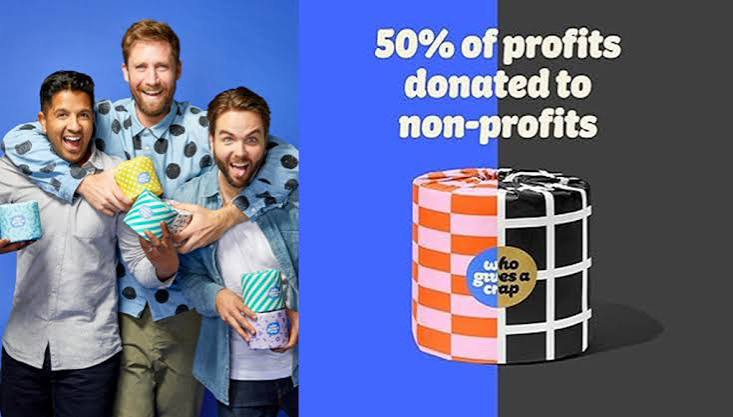
Fourteen years ago, Jehan Ratnatunga, CMA , along with Simon Griffiths and Danny Alexander, launched Who Gives A Crap after a 50-hour toilet sit stunt, pledging half profits from eco-friendly toilet paper to water and sanitation projects. Today it is a certified B Corp, sells bamboo and recycled toilet paper and donates 50% of its profits to global sanitation and clean water access. It has donated roughly $20 million AUD, becoming a global brand. Their success is attributed to a strategy of leading with a delightful, well-designed product, making sustainability joyful rather than dutiful. This genuine commitment to purpose, supported by a stable Crap Foundation for donations, allowed them to thrive. Initially focusing on direct-to-consumer sales, they now operate in major markets and teach students purpose-driven entrepreneurship, emphasising that product quality is paramount for mission-driven businesses.
This is the full story in Forbes
The Stunt
Fourteen years ago, a young Australian named Simon Griffiths sat on a toilet in a warehouse and refused to get up. He stayed there for 50 hours, streaming the stunt online, until strangers had pledged $50,000 to prove that people would buy toilet paper from a brand that gave half its profits away. They did. The product itself was just as unconventional as the pitch: toilet paper made from bamboo and recycled paper, wrapped in bold, individually printed designs instead of plastic.
Today, Who Gives A Crap sells in three of the world’s largest consumer markets. This year, the company crossed a new milestone, donating roughly $20 million AUD, about $14 million USD, to water, sanitation and hygiene projects around the world — all traceable back to a man who wouldn’t get off a toilet.
An idea that outgrew its stunt
Who Gives A Crap was founded by Simon Griffiths, Danny Alexander and Jehan Ratnatunga around a simple, almost absurd premise: toilet paper, but funny, beautifully wrapped, and tied to solving a crisis most shoppers never think about while browsing the paper aisle. Alexander recalled what pulled him in from the start, describing “this idea of basically doing good in the world, but doing it in a way that was more accessible to people by making it easier and more delightful”. When the company launched, eco-friendly toilet paper barely registered in the Australian market. Alexander estimates it now holds “well over 10%” of that market, a shift he credits to the brand’s insistence on making sustainability feel joyful rather than dutiful.
PROMOTED
That insistence became a formula. Griffiths and Alexander describe it as leading with delight and letting purpose seal the deal, rather than opening with the mission and hoping the product catches up. Griffiths called it “a conscious choice,” adding that “purpose is kind of what you do when no one’s looking.” It’s a distinction that separates brands built for a moment from ones built to last. Plenty of companies discovered purpose marketing over the past decade; fewer have kept it intact through a period when, as Alexander put it, “a lot of companies are distancing themselves from DEI” and the broader vocabulary of corporate responsibility.
Who Gives A Crap’s answer was to make genuine commitment a strategic pillar rather than a talking point. Alexander said the company’s new five-year strategy leads with the phrase “genuinely give a crap,” explaining that the word “genuinely” matters because “it’s easy to give a crap and then talk about it and put it in our marketing,” but harder to keep showing up for causes that aren’t fashionable.
From donations to infrastructure
The company’s giving model has matured alongside the business. What began as direct donations to WaterAid Australia evolved into a more deliberate, diversified approach, and eventually into the Crap Foundation, a structure designed to smooth out the unpredictability of a young company’s profits. Alexander compared the old system to donating “at like 10pm on the last day of the financial year”, leaving charity partners exposed to whatever the company’s fortunes happened to be that year. Griffiths described the fix as a kind of financial shock absorber: “it’s like a battery that sits between us and our partners,” charged during good years and discharged steadily over three, so grantees can plan rather than scramble. Being a good funder, it turns out, isn’t only about how much money moves. It’s about how reliably it arrives.
Retail almost happened differently
The company’s growth also defied its own early assumptions. Griffiths admitted that when Who Gives A Crap started, “we always thought retail would be the path to success”, and that a stalled deal with an Australian retailer, including months of unanswered phone calls from a buyer, pushed the founders towards direct-to-consumer sales instead. That detour became the engine. By the time retailers came calling years later, the company had leverage it wouldn’t otherwise have had. Griffiths put it plainly: “we’re not at the liberty of the buyer.” Today the US is the company’s largest market, the UK its second, and Australia, its birthplace, its third, with roughly 80% of customers still preferring to shop on shelves. The long-term aim, Griffiths said, is closer to an even split between retail and direct sales “over many, many years”.
Teaching the next generation to build with purpose
That same instinct to widen the circle shows up in the company’s education work. Griffiths described years of informal school visits before the founders partnered with Young Change Agents, a social enterprise with deep classroom networks, to scale the effort into a programme called Impact Boss. Jehan Ratnatunga, the internal champion of the initiative, explained that the partnership solved a basic bottleneck: “it was taking way too long to visit each school one by one.” Impact Boss now teaches students how entrepreneurship can drive impact, using Who Gives A Crap’s own early business plans, sketches and missteps as teaching material. The goal, Ratnatunga said, is to show students “that students only need an idea (even a silly one!) to start making a difference.”
What holds it together
Ask the founders what’s changed since 2012 and they’ll talk about markets, product lines, and a political climate that’s grown more sceptical of corporate do-gooding. Ask what’s stayed the same, and the answer is narrower: the brand promise, and a refusal to let it bend. Alexander’s advice to entrepreneurs starting out reflects that same order of operations. Purpose, he said, “only works if it’s built on a solid foundation,” meaning a product people would want to buy on its own merits, purpose or not. Only once that’s true does the mission have anything to scale.
What comes next
The founders remain confident that the appetite for values-driven brands hasn’t disappeared, even if the public conversation around it has grown quieter. Alexander argued that the underlying forces, climate change, inequality, aren’t retreating, so neither will the customers who care about them. Griffiths backed that up with numbers: steady customer acquisition, consistent churn rates, no sign of retreat in actual buying behaviour. Ratnatunga’s advice to other founders is characteristically unfussy: “just go for it and say yes to stuff.”
For a company that started with a man refusing to leave a toilet until strangers believed in him, it’s advice the founders have clearly taken to heart, and one that leaves the next chapter, in classrooms, in new markets, in whatever comes next, wide open.
Social Purpose Innovator Hall of Fame Award
The Institute of Certified Management Accountants inducted one of the founders, Simon Griffiths to its inaugural Social Purpose Innovator Hall of Fame in 2022 for his impact on social entrepreneurship and sustainability globally.
As the Forbes article indicates, the sole purpose and mission of Who Gives A Crap is doing good. It is now on a mission to provide everyone in the world access to toilets and safe drinking water by 2050. With some very clever marketing and a clear vision, Simon Griffiths is hoping to change the world for good.
In 2026, Who Gives A Crap surpassed the $20 million (AUD) milestone in total lifetime contributions to global water, sanitation, and hygiene (WASH) initiatives. The Australian social enterprise achieves this by donating 50% of its profits to charity partners like WaterAid Australia and Water For People.
Who Gives A Crap has shown significant growth, particularly in the Australian supermarket group Woolworths, where it experienced a 19.97% year-on-year increase. This growth suggests a rising consumer demand for purpose-driven brands. The company’s products are available in 2,920 physical locations across major retailers and independents in Australia.
In the last 52 weeks, 91% of Woolworths toilet paper customers who switched to Who Gives A Crap came from non-eco brands. The company ranks second in brand loyalty within its category at Woolworths over the same period.