

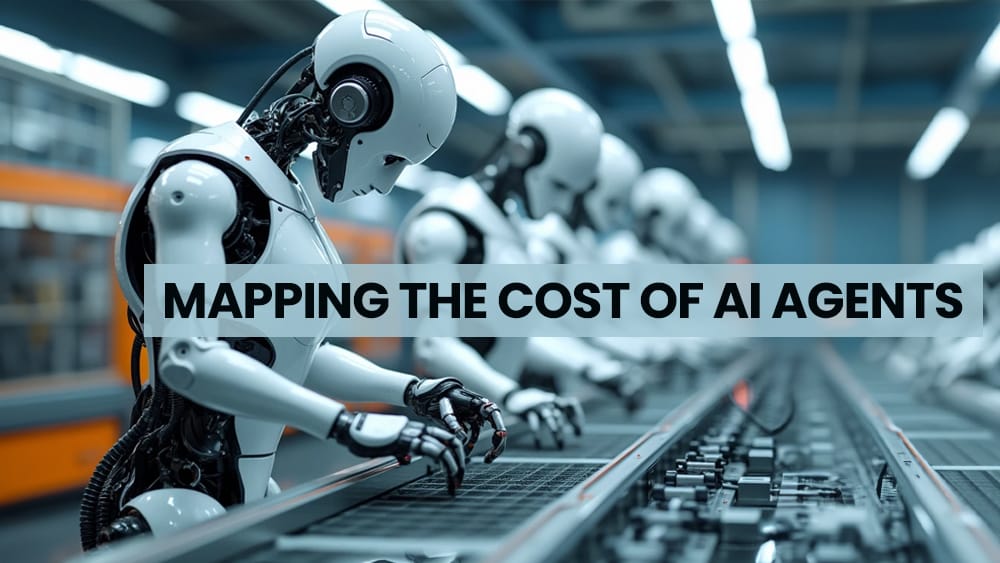

Over the past three years, the field of artificial intelligence (AI) has undergone remarkable advancements that have captivated our imaginations with unprecedented capabilities in language processing and creative problem-solving. These developments, impressive as they are, merely represent the opening act of a broader technological revolution. We are now entering a new era characterized by the emergence of autonomous AI agents capable of taking action independently and augmenting human work. This shift to an ‘Agentic Era’ signifies a revolutionary transformation that will fundamentally redefine how humans work, live, and connect with one another.
For management accountants, this shift represents key challenges for cost management systems. The cost of labour (human input) has been a core driver of both product costing and the cost of services. Over the past 50-years, direct labour has been superseded with indirect (shared) labour as organisations automated and human programmers and other human white-collar workers took over from the ‘blue-collar’ workers.
As organisations evolved and became more complex, new cost allocation systems such as Activity Based Costing (ABC) with multiple cost-drivers replaced the more traditional cost allocation systems based on a single volume-driver, such as ‘direct labour hours’.
This article considers the impact on cost management systems as machines and robots that currently require human engineers and programmers are replaced by autonomous AI agents. Will there be a return to a world in which most of the costs are ‘direct’, albeit in a non-human ‘digital labour’ form? Will there be no need to have allocations at all, if the cost of these agents can be captured at the granular transactional level? Are there any hiden costs associated with the wide-scale adoption of AI Agents across many industries?
The Evolution from Predictive and Generative AI to Autonomous Agents
Today, we are accustomed to ‘predictive AI’, which analyses data to provide recommendations, forecasts, and insights, and ‘generative AI’, which learns from data patterns to seamlessly generate text, images, music, and code. ‘AI agents’, however, represent a significant leap forward from these AI systems. Unlike traditional AI systems, AI agents are capable of performing tasks autonomously, making decisions, negotiating with other agents on behalf of humans, and adapting to new situations without requiring constant human input. This technological leap is not merely an evolution but a revolution, as it offers intelligent, scalable digital labour capable of performing tasks independently.
Consider a large retailer during the holiday season. Traditionally, human workers or pre-programmed software might handle customer inquiries or inventory updates. However, intelligent digital agents can now manage these tasks in real-time, responding to customer questions, monitoring stock levels, reordering inventory, and coordinating with shipping providers—all without human intervention. This newfound capability enables a scale of operations previously unattainable, allowing businesses to scale their operations while driving down costs and improving responsiveness.
In healthcare, AI agents are already beginning to transform the way care is delivered. With many doctors and nurses facing burnout and shortages impacting provider availability, agents can alleviate administrative burdens and improve patient communication, allowing healthcare professionals to focus on complex cases that require their expertise. For example, agents can reach out to patients post-procedure to check on their recovery, remind them about follow-up appointments, and monitor their progress, all while maintaining an understanding of their medical history and treatment plans.
The shift to ‘intelligent digital labour’ is already unlocking capacity across various industries by removing the constraints of human availability, physical limits, and geographical boundaries. Businesses can now operate on a global scale, opening up new opportunities previously limited by location. This transformation holds the potential to reshape industries and create new avenues for growth across the board.
Simultaneously, the significant cost of hiring and managing humans, from salaries, leave records, overtime and bonuses to issues of workplace safety, discrimination, burnout, sexual harassment, etc., will be avoided. The cost of running the ‘Human Resources Function’ in organisations will be significantly reduced if not avoided completely.
Netflix- A Case Study of Budget Implications of using AI Agents.
Netflix’s recent use of generative AI to create a building collapse scene in the sci-fi show El Eternauta (The Eternaut) is not only a technological milestone but also has significant budgetary implications. The shift from traditional CGI (computer-generated imagery) to generative AI is the most significant change in visual effects (VFX) since computer graphics displaced physical effects.
Traditional physical VFX requires legions of artists meticulously crafting mesh-based models, spending weeks perfecting each element’s geometry, lighting and animation. Even the use of CGI with green screens demands human artists to construct every digital element from 3D models and programme the simulations. They have to manually key-frame each moment, setting points to show how things move or change. Netflix’s generative AI approach marks a fundamental shift. Instead of building digital scenes piece by piece, artists simply describe what they want and algorithms generate full sequences instantly. This turns a slow, labourious craft into something more like a creative conversation.
El Eternauta’s building collapse scene demonstrates this transformation starkly. What would once have demanded months of modelling, rigging and simulation work has been accomplished through text-to-video generation in a fraction of the time.
The economics driving this transformation extend far beyond Netflix’s creative ambitions.The text-to-video AI market is projected to be worth £1.33 billion by 2029. This reflects an industry looking to cut corners after the streaming budget cuts of 2022. In that year, Netflix’s content spending declined 4.6%, while Disney and other major studios implemented widespread cost-cutting measures.
AI’s cost disruption is bewildering. Traditional VFX sequences can cost thousands per minute. As a result, the average CGI and VFX budget for US films reached US$33.7 million (£25 million) per movie in 2018. Generative AI could lead to cost reductions of 10% across the media industry, and as much as 30% in TV and film. This will enable previously impossible creative visions to be realised by independent filmmakers – but this increased accessibility comes with significan job losses (White, 2025).
The OECD reports that 27% of jobs worldwide are at “high risk of automation” due to AI. Meanwhile, surveys by the International Alliance of Theatrical Stage Employees have revealed that 70% of VFX workers do unpaid overtime, and only 12% have health insurance. Clearly, the industry is already under pressure (OECD, 2024).
The Impact of AI Agents on the Cost of Human Input
AI agents have the potential to significantly transform manufacturing organisations by replacing or augmenting direct labour costs, and hence impacting cost management systems. Areas in which human costs will be most significantly impacted are (a) automation of routine tasks, (b) demand forecasting (c) enhanced production planning, (d) quality control and assurance, (e) safety and risk management and (f) data-driven decision making.
In the area of Automation of Routine Tasks, AI-powered robots and automated machinery can perform repetitive tasks such as assembly, welding, painting, and quality inspection. By automating these tasks, companies can reduce the need for manual-labour, leading to decreased labour costs. AI Agents can also be deployed in predictive maintenance by training them to predict equipment failures before they occur and optimising maintenance schedules. This impacts labour costs by minimising downtime and the need for emergency repairs, and reduces the labour required for maintenance.
In the area of Demand Forecasting, AI systems are being used to predict market demands, allowing companies to adjust production levels accordingly. By aligning production with demand, minimising the need for extra shifts or temporary labour to meet unexpected demand spikes. For example, AI forecasts seasonal demand increases, ensuring that production is scaled appropriately without relying on costly temporary labour.
In the area of Enhanced Production Planning, AI agents can be used for supply chain optimisation by analysing data to optimise inventory levels and supply chain logistics. This impacts labour Costs by reducing manual intervention needed for inventory management and logistics planning. For example, AI agents can forecast demand and adjust inventory levels in real-time, reducing the need for workers to manually track and order supplies. AI agents can also be used in scheduling and resource allocation by optimising workforce scheduling based on production demands and employee availability. This ensures the efficient use of labour, minimising overtime and prevents the underutilisation of staff.
In the area of Quality Control and Assurance, AI-powered vision systems can carry out automated quality inspections that can inspect products for defects faster and more accurately than human inspectors. This reduces the need for human inspectors, lowering labour costs associated with quality control. Already, AI systems in electronics manufacturing are being used to detect defects in circuit boards with high precision, improving quality while reducing inspection labour. Process optimisation, where AI agents analyse production processes to identify inefficiencies and suggest improvements are already being implemented across many companies. Such streamlined operations reduce the need for manual oversight and intervention, thereby cutting labour costs. For example, AI-driven analytics identify bottlenecks in a production line, allowing for adjustments that improve efficiency and reduce the need for additional staffing.
In the area of Safety and Risk Management, AI-driven robots are increasingly being used in hazardous task automation by deploying them to perform dangerous tasks, thus reducing the risk of injury to human workers. This lowers costs associated with workplace injuries, insurance, and compensation. AI systems are also being used in risk assessment, to assess operational risks and provide mitigation strategies. This reduces the need for extensive human involvement in risk assessment and safety planning, a significant cost saving. For example, AI agents are being used to predict potential safety hazards in a production line, allowing for preemptive action to prevent accidents and reduce associated costs.
It is in the area of Data-Driven Decision Making, however, that AI agents have the greatest potential impact on the cost of human input in organisations. Already they are being deployed in real-time analytics, in which AI systems provide real-time data insights that help managers make informed decisions quickly. Many companies have developed AI enhanced dashboards to display production metrics and trends, enabling managers to adjust operations on the fly without extensive manual data analysis.This reduces the need for data analysts and manual data processing, shifting labour demands from data collection to strategic oversight. However, in the very near future, AI agents will have the capability to make many informed strategic decisions themselves. This will significantly impact the cost of senior management as well.
Unlocking Capacity Across Industries
As with any monumental change, the rise of AI agents comes with its own set of challenges and concerns. Ensuring that AI systems are built with trust, accountability, fairness, and transparency as core values is paramount. As AI transforms the workplace, it is crucial to invest in the training, creativity, and critical thinking skills that are uniquely human.
In this article, it is assumed that future AI Agents will be trained to implement ethical AI practices. This training will begin at the development phase, where AI systems are trained on diverse and representative datasets to avoid biases that could lead to discriminatory outcomes. Let us also assume that there will be transparency in AI algorithms and decision-making processes so that trust has been built among users and stakeholders, ensuring that AI agents in the future will operate within ethical boundaries and contribute positively to society.
The question is, “Who pays for all this training of AI Agents – giving them the creativity, and critical thinking skills that are uniquely human?”
The cost of such advanced training will be bourne by the users, via the pricing mechanism. The suppliers of the AI Agents, will incorporate development and training costs into their prices. If the fee is charged on a pay-per-usage or subscription basis, then the accounting will be similar to a software licennce and be expensed. In such cases a ‘human input cost’ will now show as an ‘overhead cost’. However, it may be better to show such costs a ‘Digital Labour Costs’ in the profit & loss account.
If the AI Agents are linked to robotics, they will be performing physical tasks previously done by humans. In such cases they should be treated as no different to plant and machinery and capitalised. Thus a human cost item that directly impacted the ‘profit & loss’ account in previous periods, will now impact it only indirectly via depreciation.
Navigating the Disruptions and Risks
While the benefits of AI agents are clear, the transition to this new “Agentic Era” will inevitably bring disruptions and risks. Some companies may struggle to adapt, and nearly every job will undergo some level of change. As history has shown with previous technological advancements—such as the advent of jets, the Internet, and smartphones—some jobs may disappear, but new opportunities will emerge. For instance, in 1950, there were 43 million employed Americans, and by 2020, that number had grown to over 152 million, with many new jobs in categories that did not exist before (Benioff, 2024).
The difference between ‘then’ and ‘now’ is, however, that all those earlier ‘new jobs’ required humans to fill them. The ‘new jobs’ that will be created in the coming Agentic Era would most likely be filled by the AI Agents themselves.
Although the rise of AI has already led to the funding of over 5,000 new artificial intelligence companies in the U.S. alone over the past decade, once the technology settles, there will surely be a shake-down of the industry. After all, in the first decade after the “birth” of the US automobile industry,there were 485 American automobile manufacturers (Rae and Binder, 2025). Today, in the USA there is only the Big-3 —GM, Ford and Stellantis(Chrysler) — and Tesla.
Automobile technology not only impacted that industry but also had a ripple effect across the global economy, creating jobs and driving technological advancements in various sectors. This not only impacted the automobile industry but also had a ripple effect across the global economy, creating jobs and driving technological advancements in various sectors. Similarly, AI’s growth will not only impact the tech industry but also have a ripple effect across the global economy. Clearly, AI agents are poised to drive significant innovation, creating countless new companies and job opportunities. The question is, “Would the new jobs created be filled by humans or AI Agents?”.
One can envisage AI’s potential to contribute to GDP growth in regions where the skilled or semi-skilled labour force is stagnant or shrinking. However, in the coming Agentic Era, even professional jobs will be able to be done by AI Agents.
Ethical Considerations and Governance
While AI agents hold great promise, it’s crucial to acknowledge the ethical considerations and governance challenges they present. Technology, in itself, is neutral; it is how we choose to use it that determines its impact. Without adequate oversight and well-curated training data, autonomous AI systems can make decisions that conflict with human values or ethics. For example, they might prioritise profit over safety or inadvertently discriminate against certain groups. To harness the power of agentic AI effectively, a multistakeholder approach involving businesses, governments, nonprofits, and academia is necessary to establish clear guidelines and guardrails.
Efforts are already underway to address these challenges. The G7 nations have put forward a framework that emphasises accountability, transparency, safety, and data privacy. Similarly, the Bletchley Declaration, supported by 28 countries and the European Union, emerged from the UK AI Safety Summit. This declaration represents a collective commitment to collaborate on AI safety and development, ensuring that AI advancements are aligned with societal values and ethical standards.
Building a Framework for Responsible AI Agent Deployment
To fully realise the potential of AI agents, it’s essential to build a robust framework for their responsible deployment. This involves establishing clear ethical guidelines, promoting transparency in AI systems, and ensuring that AI systems are developed and used in ways that align with societal values. A col labourative approach involving multiple stakeholders—businesses, governments, academic institutions, and civil society—is crucial in crafting regulations and policies that govern AI technologies effectively.
Further, as AI agents increasingly interact with both corporate and personal data, ensuring data privacy and security becomes paramount. In the case of human workers, organisations employ a variety of strategies to protect confidential information and prevent employees from divulging it. These protections can be categorised into legal, procedural and technical measures.
Legal protections such as employment contracts that include clauses that address the handling of confidential information; non-disclosure agreements (NDAs) and intellectual property (IP) agreements obviously make no sense with an AI Agent, and thus will need to be modified and contracted with the supplier of the AI Agent.
Procedural protections such as information access controls can be implemented with AI Agents to limit access to confidential information based on role and necessity. However other procedural protections such as exit interviews to reinforce confidentiality obligations at the termination of employment, again are not applicable to AI Agents.
What the organisation will need to do is to beef up technical protections such as data encryption and network security measures to secure company networks from unauthorised access. Firewalls, intrusion detection systems, and secure VPNs will be required at the AI Agent level.
Therefore,robust data protection measures must be implemented to safeguard sensitive information from unauthorised access and misuse. This includes developing advanced encryption techniques, establishing clear data governance policies, and fostering a culture of privacy awareness among AI developers and users.
Data privacy concerns can be addressed through regulations such as the General Data Protection Regulation (GDPR) in Europe, which provides a framework for protecting individuals’ data rights. By adopting similar standards globally, we can ensure that AI technologies respect user privacy and maintain public trust in digital systems.
Conclusion: Embracing the Agentic Era
The advent of autonomous AI agents marks a transformative milestone in the evolution of technology, offering unprecedented opportunities to redefine how we work, live, and interact with the world around us. By harnessing the power of these intelligent systems, we can unlock new levels of efficiency, innovation, and inclusivity across industries and communities worldwide.
However, realising the full potential of the Agentic Era requires a concerted effort from all sectors of society. It demands a commitment to ethical practices, transparency, and collaboration to ensure that AI technologies are developed and deployed in ways that align with our shared values and address societal challenges.
As businesses, governments, and individuals come together to navigate this new landscape, the focus must remain on fostering an environment that encourages innovation while safeguarding the rights and well-being of all stakeholders. By investing in education, promoting data privacy, and building robust ethical frameworks, we can create a future where AI agents not only enhance productivity and economic growth but also contribute to a more equitable and sustainable world.
In this new era, AI agents have the potential to not only drive technological advancement but also to empower individuals, uplift communities, and address global challenges such as climate change and healthcare access. As we move forward, let trust, responsibility, and collaboration be our guiding principles, ensuring that the transformative power of AI is harnessed to create a future of abundance and opportunity for all.
References:
Benioff, Marc (2024), “How the Rise of New Digital Workers Will Lead to an Unlimited Age” Time Magazine, November 25. https://time.com/7178872/agents-unlimited-age/
OECD (2024) “Who will be the workers most affected by AI?”OEDC Artificial Intelligence Papers No. 26, October, https://www.oecd.org/content/dam/oecd/en/publications/reports/2024/10/who-will-be-the-workers-most-affected-by-ai_fb7fcccd/14dc6f89-en.pdf
Rae, John Bell and Binder, Allan K (2025) “Automobile industry”, Encyclopaedia Britannica. July 25. https://www.britannica.com/technology/automotive-industry.
White, Edward (2025), “Netflix is now using generative AI – but it risks leaving viewers and creatives behind’, The Conversation. July 28. https://theconversation.com/netflix-is-now-using-generative-ai-but-it-risks-leaving-viewers-and-creatives-behind-261699